High-rises in the City of Zurich: yes to the stricter proposal
On 27 September 2026, the City of Zurich adopted its city parliament's (Gemeinderat) proposal for a partial revision of the building and zoning code (Bau- und Zonenordnung, BZO) for high-rises, with 62.55 percent voting yes. Every city district approved it. The city executive's (Stadtrat) counter-proposal received 37.53 percent and was rejected, so the tie-break question did not come into play. Turnout was 45.83 percent. What the two proposals were about is covered in the Week 39 post.
In the city parliament, the stricter proposal was backed by AL, the Greens, SP and SVP. FDP, GLP and Mitte called a referendum against it, which is why the vote took place at all.
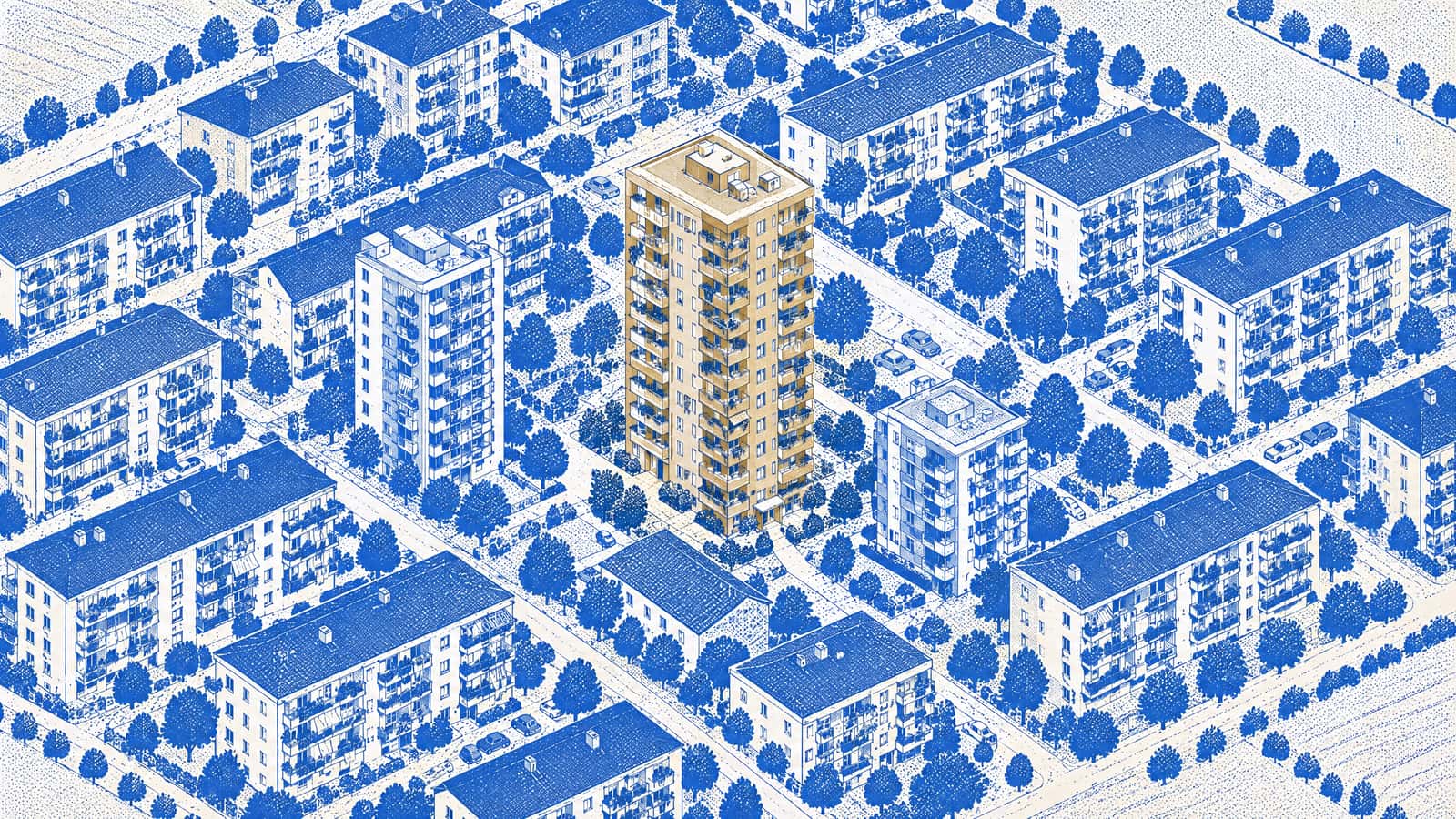
In substance, the high-rise area shrinks considerably overall. There will be three height levels: 40, 60 and 80 meters. The 80-meter area gets smaller, and a 60-meter area is added. High-rises of up to 40 meters are reserved for a small number of selected neighborhood centers.
The number I find more important than the result is 60. From that height, a high-rise will need a special development plan (Gestaltungsplan) approved by the city parliament, on top of the special building regulations. Today that only applies from 80 meters. A Gestaltungsplan is a planning procedure of its own that comes before the building application, with a public display period and a political decision. The adopted proposal also requires a competitive procedure (Konkurrenzverfahren) for every high-rise, meaning an architectural competition or a commissioned study. And where a Gestaltungsplan grants additional floor area, all of it goes to affordable housing.
None of this is in force yet. The city hands the proposal to the cantonal building department (Baudirektion) for approval, after which the city executive puts it into force. The city has not given a date. Until the revision is legally binding, the negative anticipatory effect (negative Vorwirkung) of a 2024 city executive decision continues to apply to the new high-rise areas and their maximum heights. It means planned rules take effect before they are in force: a building application that contradicts them can be refused, even if it complies with the old rules.
And a high-rise area is not an announcement. The voting pamphlet calls these areas "possibility areas" (Möglichkeitsgebiete): taller buildings are allowed there, but not required. Whether a high-rise actually goes up in a neighborhood only becomes clear once a Gestaltungsplan or a building application is put on public display.
Sources (in German): Statistical Office of Canton Zurich, results of the vote of 27.09.2026 · City of Zurich, high-rises and partial BZO revision, September 2026 · City of Zurich, voting pamphlet for 27.09.2026
Policy rate unchanged, rate expectations not
I already covered the interest rate decision of 24 September last week: the Swiss National Bank is keeping its policy rate at 0 percent. What's moving around it is more interesting.
Inflation rose slightly, from 0.6 percent in May to 0.8 percent in August. According to the SNB, higher prices for oil products were the main driver. For 2026 as a whole, the National Bank expects inflation of 0.7 percent, and 0.8 percent each for 2027 and 2028. That forecast assumes the policy rate stays at 0 percent through 2028. Abroad, rates are already going up: the European Central Bank and the US Federal Reserve both recently raised their policy rates by 0.25 percentage points.
Financial markets expect Switzerland to follow. After the decision, they are still pricing in more than two rate hikes by mid-2027. The financial firm smzh puts that at around 2.3 hikes by June 2027, which would mean a policy rate of just under 0.6 percent. Its own view (translated): "We share the market's expectation on the direction, but not on the pace."
For fixed-rate mortgages, this expectation matters more than the decision itself. A SARON mortgage closely follows the policy rate, because SARON moves in line with it. A fixed-rate mortgage, by contrast, is usually priced off the swap rate for its term. Swap rates show what fixed rate the market demands for a given term in exchange for the variable SARON, and so how it expects rates to develop. That's why a fixed-rate mortgage can get more expensive without the National Bank changing anything.
Burak Er, Head Research & Advisory Solutions at smzh, sees exactly that (translated): "Swap rates have recently risen, especially for medium terms." For real estate investors, he currently considers a longer fixed-rate term "suboptimal", given the high hedging premiums and the SNB's room for maneuver in monetary policy. That's a market view, not a rule for your own purchase. Which term suits a financing depends on your own situation, and I'm not making a recommendation on that here.
For tenants, a second channel is at work: the mortgage reference interest rate (Referenzzinssatz) that rent adjustments are tied to. It stays at 1.25 percent. It's derived from the average interest rate on domestic mortgage claims, rounded to the nearest quarter percent. That average stood at 1.31 percent on the reference date of 30 June 2026. The reference rate only rises once the average exceeds 1.37 percent, and falls if it drops below 1.13 percent. Because the average covers all existing mortgages, it moves slowly. The next publication is scheduled for 1 December 2026.
Sources (in German): Swiss National Bank, monetary policy assessment, 24.09.2026 · 20 Minuten, Nationalbank belässt Leitzins unverändert, 24.09.2026 · smzh, assessment of the monetary policy decision, via Moneycab, 24.09.2026 · Federal Office for Housing, reference interest rate, 01.09.2026
What this means for Canton Zurich
Both stories shift the framework and the expectations first, not the existing housing stock. The high-rise decision sets where in the City of Zurich taller buildings may go in future, and through which procedure. According to the voting pamphlet, it creates no additional building capacity, and it's not in force yet. On rates, the policy rate stays where it is while the market is already pricing in hikes. For a fixed-rate mortgage, the swap rate for your own term is therefore a more telling number than the policy rate headline.
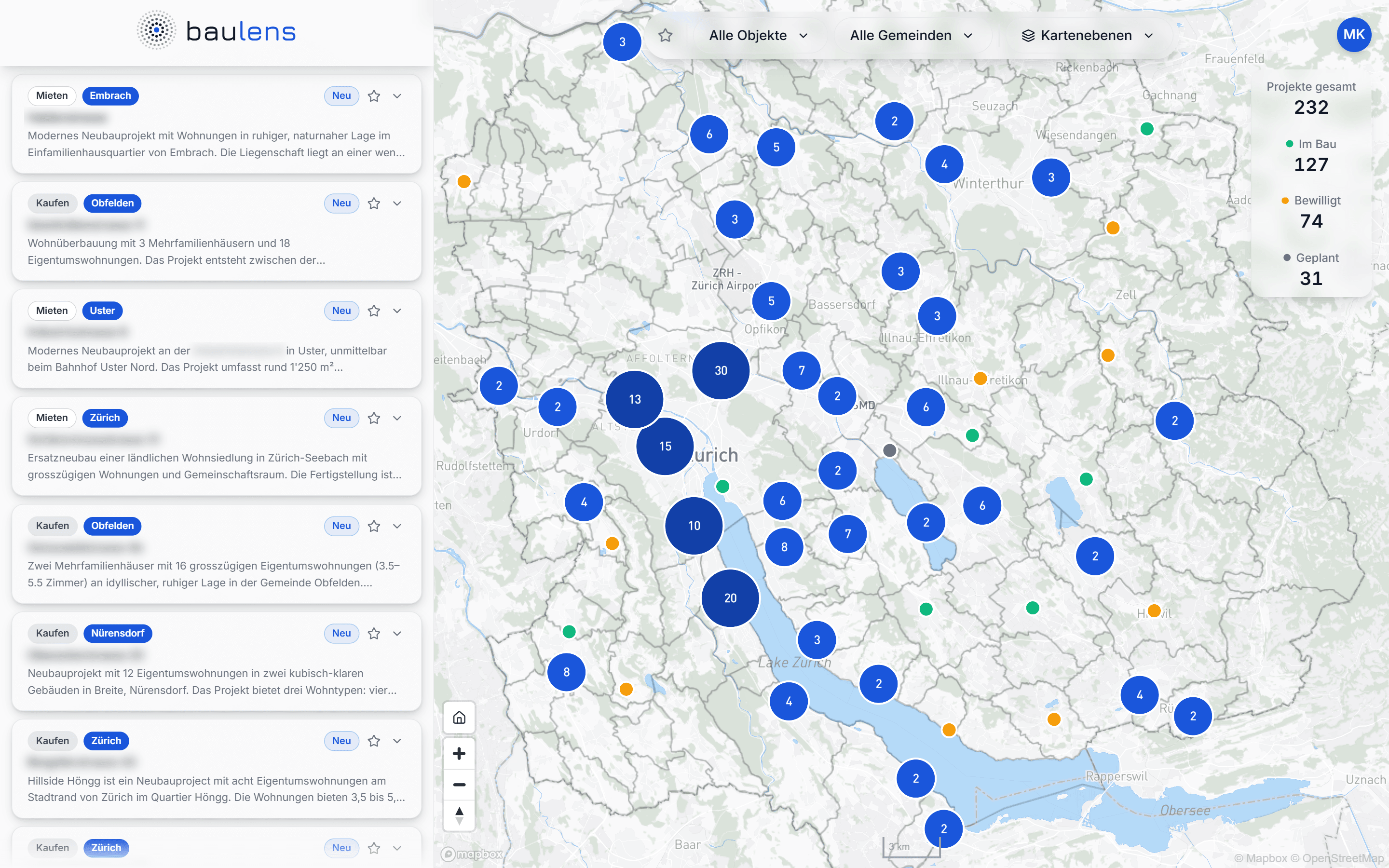
The Baulens map shows which new-build projects in the City of Zurich and across the canton are planned, approved or under construction. It only shows projects with their own project website, so a high-rise that's on public display usually won't be there yet.